Monday, 12 June 2017

DIGITAL ETIQUTTE QUESTION 4

Digital Etiquette: Is the awareness of being a responsible online citizen.


According to Mike Ribble (2013), this is one of the more problematic issues in digital citizenship. People recognize inappropriate behavior but don't know how to appropriately combat it. Many feel uncomfortable confronting others about their etiquette. When people use technology they often don't learn how to properly use digital etiquette.(Digitalcitizenship.net


Digital Code Of Conduct

One should act safely in the digital world to prevent disruption or harm to themselves and others.


One should work to have a balanced, healthy lifestyle relationship with technology.One should protect themselves and others by reporting digital abuse of people and property.
One should ensure the privacy of my own information​.
Individuals should demonstrate ethical behaviour in the digital world just as they would in the real world.
Individuals should use technology in an appropriate manner.
Users should make appropriate digital decisions by committing themselves to a high standard of conduct and procedure.
Users should NOT break any laws or rules dealing with the use of technology.
Individuals should follow the established rules surrounding technology and take responsibility for my actions.Users should demonstrate consideration of, and respect for, school and peer technological resources and use them appropriately.
Penalties
Penalties are steps that will be taken if one disobeys the code o conduct.
The most common penalty that take place within the technology industry is that if an account is found to be disturbing or unappropriated the controller of this site or page may block that account to access that page/site.
Enforcing and managing in the work place
In the work place I would keep an eye on every computer that logs on to the internet. And in so doing it ill detect who is abusing the privilege of using the net in the work place. Further more that individual will no longer be able to use the net while at work.



DIGITAL SECURITY

Hazards of online activity

Digital security involves the protecting computer's internet account and files from being stolen by an outside user. Internet users today are very familiar with companies like Symantec (Norton Anti-Virus) and McAfee that provide them with internet security products and resources to guard against computer viruses and to provide secure firewalls and protection against spyware.

The T&C on programmes are sometimes helpful but at times it can be irritating to internet users. How so is that T&C may mislead people in terms of knowing that most people do not read these conditions. In most cases readers are mislead by these terms and conditions and are unable to understand the guidelines due to that type of jargon been used. Some people don't know that Terms and Conditions spell out the fees and interest charges you could incur as a cardholder. And in so doing this can be seen as a way of tricking users of the net.

Cyber-crime is any criminal or other offence that is facilitated by or involves the use of electronic communications or information systems, including any device or the Internet or any one or more of them  is any crime that involves a computer and a network. The computer may have been used in the commission of a crime, or it may be the target.
Types of cyber crimes:
  • Hacking>Hacking is having access(wanted or unwanted) to a computer that doesn't belong to you and viewing, copying, or creating data(leaving a trace) without the intention of destroying data or maliciously harming the computer. This can avoided by not clicking on a fraudulent link sent to you either by email or social media apps.
  • Online scams >  A swindle involving money, goods, etc, in which the victim's trust is won by the swindler. Find more information about who your dealing before trusting who your working with. Be familiar with the website your working on.
  • Fraud > wrongful or criminal deception intended to result in financial or personal gain. It can be reduced by one being honest and not stealing from other people. Owners social media can put pins to avoid being stolen from.
  • Identity Theft > The fraudulent practice of using another person's name and personal information in order to obtain credit and loans. This can avoided by people setting pin codes that are not easy to crack.
  • Attacks on computer systems >
  • Illegal online content > This is when one does not acknowledge the original author of a quote or article.
  • Sales and Investment frauds: Investing in companies that do not really exist. 

BIBIOGRAPHY

DIGI today |. (2016). | DIGI today |. [online] Available at: https://digitodayblog.wordpress.com [Accessed 02 JUN. 2017].
ppt slide 2,3

DIGITAL CITIZENSHIP MODULE MANUAL 2016 (First Edition: 2015) [online] Available at:  https://portal.iie.ac.za/Student%20Manuals/DIGC5110_Digital_Citizenship/2016/STManual.pdf[Accessed 02 JUN. 17 ].

Digital Citizenship ;are you a digital citizen?. (2016). Digital Rights and Responsibilities. [online] Available at: http://areyouadigitalcitizen.weebly.com/digital-rights-and-responsibilities.html [Accessed 03 JUN. 2017].

Digital Citizenship Module Manual 2016 (First Edition: 2015) 

magnifique2016. (2016). Summary and Response of Homo naledi. [online] Available at: https://magnifique2016.wordpress.com/summary-and-response-of-homo-naledi/ [Accessed 03 JUN. 2017].


CNBC. (2015). Top 5 cybersecurity risks for 2015. [online] Available at: http://www.cnbc.com/2014/12/19/top-5-cyber-security-risks-for-2015.html [Accessed 04 JUN. 2017].

Thursday, 8 June 2017

DIGITAL BILL OF RIGHTS

The Digital Bill of Rights

  1.  Image result for digital bill of rights
    1. Freedom - digital citizens have a right to a free, uncensored internet
  2. 2. Openness - digital citizens have a right to an open, unobstructed internet
  3. 3. Equality - all digital citizens are created equal on the internet
  4. 4. Participation - digital citizens have a right to peaceably participate where and how they choose on the internet
  5. 5. Creativity - digital citizens have a right to create, grow and collaborate on the internet, and be held accountable for what they create
  6. 6. Sharing - digital citizens have a right to freely share their ideas, lawful discoveries and opinions on the internet
  7. 7. Accessibility - digital citizens have a right to access the internet equally, regardless of who they are or where they are
  8. 8. Association - digital citizens have a right to freely associate on the internet
  9. 9. Privacy - digital citizens have a right to privacy on the internet
  10. 10. Property - digital citizens have a right to benefit from what they create, and be secure in their intellectual property on the internet

DIGITAL LAW


what is DIGITAL SOCIALIZATION?

It focuses on the understanding the use of digital media as part of everyday life and how this different technologies contribute to the patterns of human behavior, social relationships and how an individual understands themselves in the digital world. Digital Law is defined as the electronic responsibility for actions, deeds which is either ethical or unethical. Digital responsibility deals with the ethics of technology. Unethical documents uses itself informs of theft or crime


HOW CAN SOCIAL MEDIA CHANGE COMMUNITIES AND THEIR PRACTICE AND TRADITION?

social media can change different communities, practices and traditions across the world in that it provides information about different cultures on how they live, eat, talk and communicate. in this new age of the digital world, social media gives out or exposes different issues online. social media can change communities in that by interacting with people from different parts of the world you get to learn more about various cultures and how they live. it can also decrease the criticism that is perceived by people about certain cultures and their practices whether its through rituals or anything that mends the culture to be unique.


WHAT ETHICAL ISSUES COLD ARISE AS A RESULT OF DIGITAL SOCIALIZATION
.
  • Acculturation- a process of cultural and psychological change due to two-way cultural interaction whereby one's culture is displayed to a different cultural group.
  • Behavior- since access to technology has increased our lives have changed significantly, we have evolved into multi-tasking individuals and that has changed our behavior some for the better and sadly for some the worst.
  • Privacy- as the number of people engaging social networks has increased rapidly and that means many supplies their personal information as it a standard procedure and that people feel comfortable using these applications and site. People, businesses and the government can access the information displayed online and that makes everyone a potential victim of a violation of privacy.
  • Crime-  The internet allows any individual to manipulate it to their tailored needs like criminal activity whether its money laundering, violation of copyrights, piracy and illegal distribution of content.
  • Staged effect- the loss of value of tradition and rituals as they become a commodity
  • Commodification- The reduction of cultural traditions to be showcased in the global audience

References

Digital Citizenship Module Manual 2016 (First Edition: 2015) 


Wednesday, 7 June 2017

DIGITAL COMMERCE

what is digital commerce?

Digital commerce is a type of e-commerce used by an organization that delivers and sells products online. D-commerce is used by companies that sell news, subscriptions, documents or any form of electronic content, and the digital commerce company collects payments, handles customer refunds and billing and manages other accounting functions for online publisher clients.

Digital commerce is the electronic selling and buying of goods


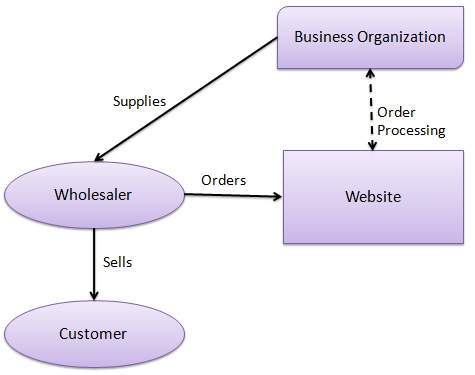
Website following B2B business model sells its product to an intermediate buyer who then sells the product to the final customer. As an example, a wholesaler places an order from a company's website and after receiving the consignment, sells the end product to final customer who comes to buy the product at wholesaler's retail outlet.
B2B Model
B2B implies that seller as well as buyer is business entity. B2B covers large number of applications which enables business to form relationships with their distributors, resellers, suppliers etc. Following are the leading items in B2B e-Commerce.
Business - to - Consumer(B2C)
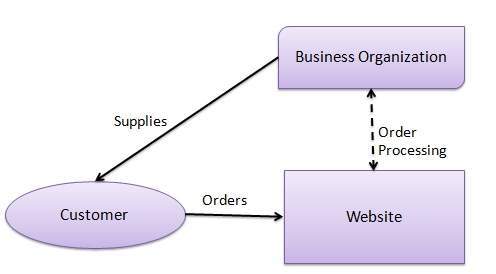
  • Website following B2C business model sells its product directly to a customer. A customer can view products shown on the website of business organization. The customer can choose a product and order the same. Website will send a notification to the business organization via email and organization will dispatch the product/goods to the customer.
    B2C Model

    Consumer - to - Consumer (C2C)

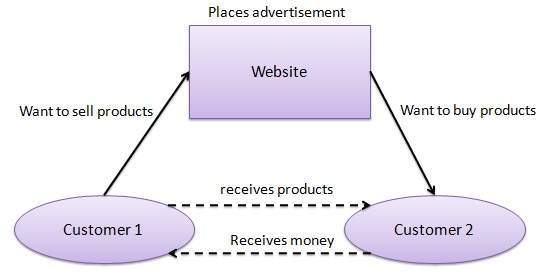
    Website following C2C business model helps consumer to sell their assets like residential property, cars, motorcycles etc. or rent a room by publishing their information on the website. Website may or may not charge the consumer for its services. Another consumer may opt to buy the product of the first customer by viewing the post/advertisement on the website.
    C2C Model

    Consumer - to - Business (C2B)

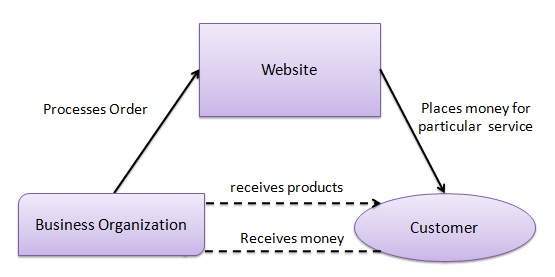
    In this model, a consumer approaches website showing multiple business organizations for a particular service. Consumer places an estimate of amount he/she wants to spend for a particular service. For example, comparison of interest rates of personal loan/ car loan provided by various banks via website. Business organization who fulfills the consumer's requirement within specified budget approaches the customer and provides its services.
    C2B Model

DIGITAL HEALTH AND WELLBEING

MY PINTEREST BOARD


https://za.pinterest.com/mandisamt04/

DIGITAL ETIQUTTE QUESTION 4

Digital Etiquette: Is the awareness of being a responsible online citizen. According to Mike Ribble (2013), this is one of the more probl...